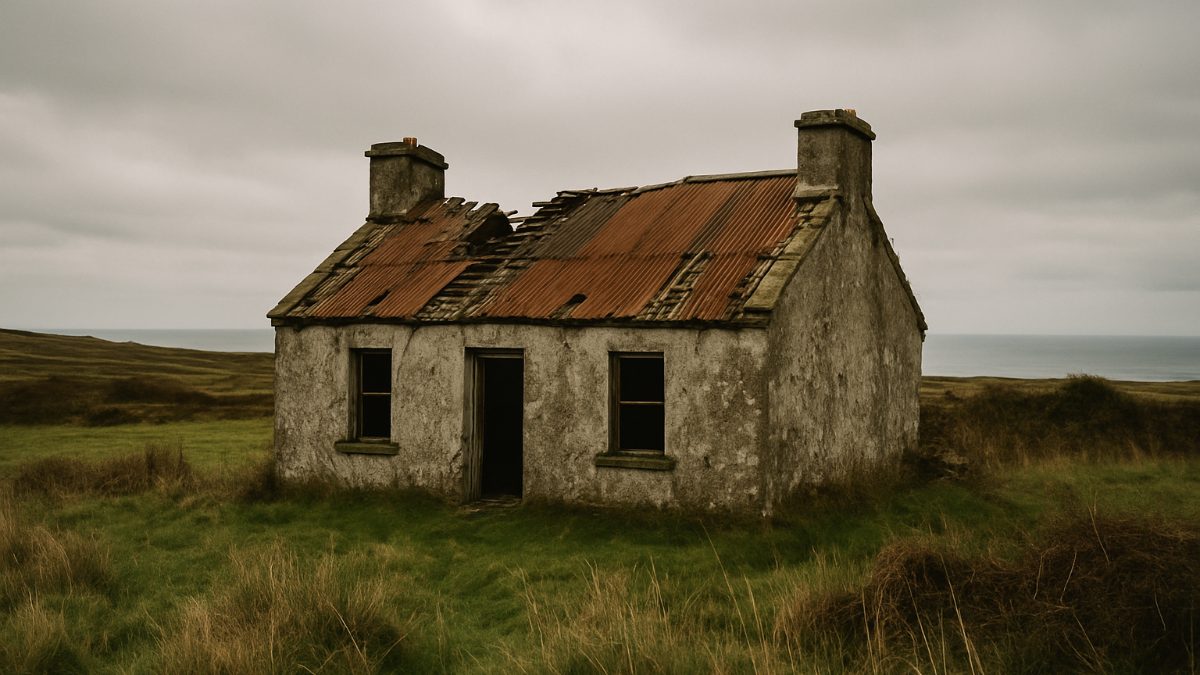
The dream is easy to picture. A stone cottage above a cove, salt air coming through the window, the sound of water at night. What people picture less clearly is the planning enforcement notice tucked into the solicitor's file, or the moment a structural engineer looks at the gable wall and goes very quiet.
Derelict cottages near the Irish coast are genuinely appealing, and genuinely complicated. Here is what tends to catch people off guard.
The legal situation is rarely clean
Coastal properties, particularly older ones that have passed through families without formal sales, often have title problems. Rights of way that were never registered. Boundaries that exist on the ground but not on paper. Extensions built without planning permission decades ago that are now, technically, your problem.
Some of this can be resolved. Some of it takes months and costs more than expected. The mistake is assuming that a low asking price means a straightforward purchase. Quite often it means the opposite. Before anything else, get a solicitor with specific experience in rural and coastal property in Ireland, not just a general conveyancer. Ask them directly whether they have handled properties with title irregularities before. Many have not.
It is also worth checking the planning history yourself through the relevant county council portal before you commission a survey. If there are unauthorised structures and the council has already noted them, that changes things considerably.
The structure has usually been fighting the weather for years
Old stone cottages were built with lime mortar, earthen floors, and no damp-proof course, because they were designed to breathe moisture out rather than seal it in. Decades of abandonment, or worse, decades of half-hearted cement pointing and modern paint that traps moisture inside the walls, can leave a building in a genuinely precarious state.
A standard surveyor's report will not always catch the full picture on a building like this. You want someone who understands vernacular construction, who knows what to look for in a rubble stone wall that has been repointed with the wrong material. The repair costs on a badly patched cottage can be substantial, and if you later try to insulate or modernise without understanding the original build logic, you can create new problems. The mistakes people make insulating old coastal cottages are almost always rooted in treating the building like a modern house when it is not one.
The location that attracts you is also what makes it hard to work on
Remote coastal sites are beautiful and difficult to supply. Builders who will travel to them are fewer, and their day rates often reflect the distance and the conditions. Materials cost more to deliver. If the access road is poor, some contractors will decline the job entirely or quote accordingly.
This is not a reason to walk away, but it is a reason to get proper contractor quotes before you commit to a purchase price, not after. Too many buyers fall in love with a view, agree a price, and then discover that the realistic renovation budget is nearly double what they imagined. Talk to local builders first. Ask around in the nearest town. People in coastal communities are generally honest about what is feasible and what is not.
Planning permission near the coast is its own subject
Coastal and rural areas often fall under specific zoning designations, and what you can build, extend, or change is not always obvious from looking at the structure in front of you. Some counties have additional landscape or heritage protections that restrict alterations to traditional buildings. If the cottage is within a certain distance of the water, flood risk mapping may be relevant. If it is in a Special Area of Conservation, that brings its own conditions.
None of this is insurmountable, but it requires specific advice from a planning consultant who knows the local authority and the relevant legislation. Do not rely on what the seller tells you was approved, or on what a neighbour did with their property three fields away.
The emotional part is real too
People underestimate how much the project will ask of them. Not just money, but patience and sustained decision-making over a long period. If you are buying as a holiday property or a future retirement plan rather than a primary home, it is worth thinking carefully about whether that timescale actually suits your life before you sign anything.
If you do go ahead, keep a contingency of at least twenty percent above whatever your builder quotes you. Coastal renovation projects almost never come in exactly as planned, and the ones that do are the exception.