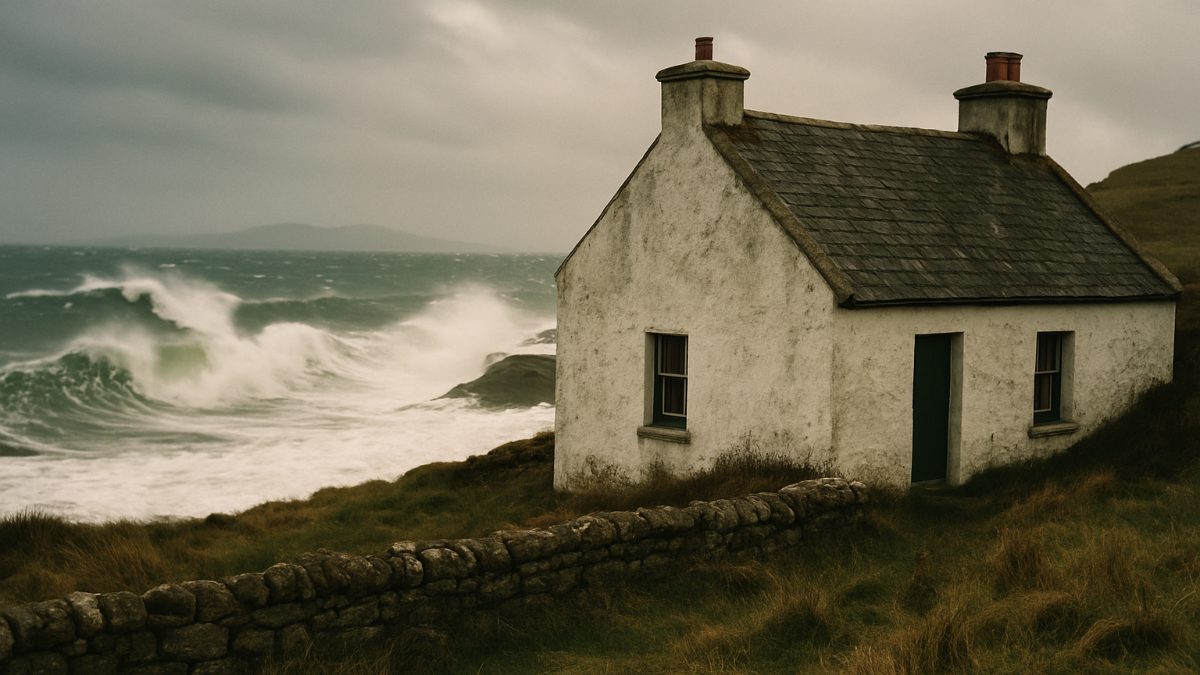
If you live close to the Atlantic, you already know what a bad winter can do. Salt-laden wind, driving rain for days at a stretch, the odd storm that rattles the slates and has you up at three in the morning checking the skylight. Getting a few hours of maintenance done in September or October is worth far more than the same hours spent on repairs in January. Here is a practical checklist to work through before the first real gale arrives.
Gutters and Downpipes
Clear them out properly, not just a quick poke with a stick. Coastal homes accumulate salt, sand, and organic debris faster than inland properties, and blocked gutters in a heavy downpour mean water finding its way into walls or behind fascia boards. Check that downpipes are flowing freely at the bottom and that water is directed away from the house foundations. While you are up the ladder, look at the state of the fascia and soffit boards themselves. Rot sets in quickly where salt moisture gets under peeling paint.
Pointing and External Walls
Run your hand along the mortar joints on any exposed stone or brick. If it crumbles or falls away easily, it needs repointing before winter. Failing mortar on a west-facing wall is an open invitation to water ingress. This is especially true of older cottages built with lime mortar, which needs like-for-like replacement rather than modern cement, which can trap moisture and cause more damage than it prevents. If you have made mistakes here before, the experience of damp walls and salt-driven moisture in a west Cork cottage is a useful read on why the wrong approach costs more in the long run.
Window and Door Seals
Check every seal around your windows and exterior doors. UV light and salt air degrade rubber and silicone faster on coastal properties, and a seal that looked fine in summer can let in draughts and water once the pressure of a storm hits. Press gently around the frame edges. If there is any give or visible cracking, cut out the old sealant and apply fresh. It is a cheap fix compared to dealing with rot in a window frame six months later.
Oil Tank and Fuel Supply
Get your oil tank checked and topped up before the winter rush hits the suppliers. Look at the tank itself for any signs of rust or weeping around the fittings, and make sure the bund or containment area is clear and intact. Check that the filter and feed pipe are in good order. A heating system that fails in a February storm on the west coast is not a minor inconvenience.
Drainage and Ground Around the House
Look at how water moves around your property. If it is pooling against the house after rain now, it will be worse under storm conditions. Clear any blocked surface drains or gullies. Check that the ground slopes away from the walls rather than towards them. If you have any raised beds or planting close to the house, consider whether they are directing water where you do not want it. Building a garden that works in a coastal climate, rather than against it, makes this easier to manage over time, and there is practical guidance on that here.
Roof and Chimneys
You do not necessarily need to go up yourself, but get a good look from the ground with binoculars if you can. Missing or slipped slates, cracked ridge tiles, and loose chimney pointing are all common after a summer of thermal expansion and coastal weathering. If anything looks uncertain, get a roofer to take a look before November. A short visit now is significantly cheaper than emergency call-out rates in a storm.
Work through the list in one afternoon and you will head into winter knowing the house is as ready as it can be.