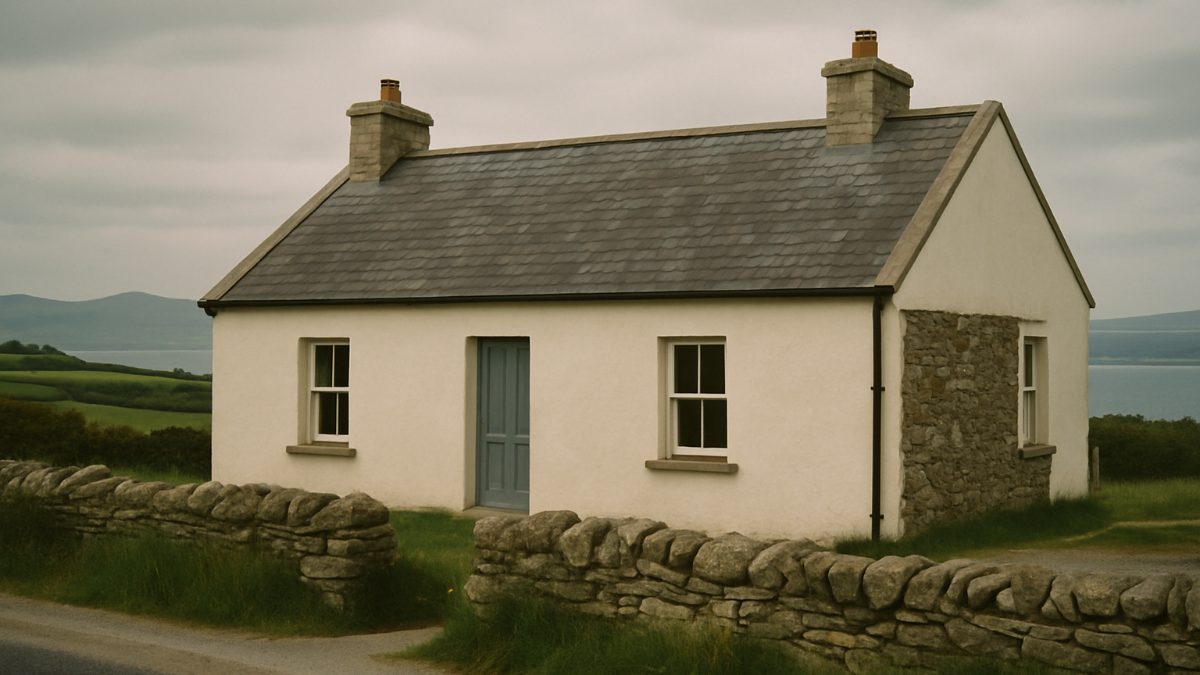
The farmhouse had stood on the Sligo coast for well over a hundred years before I got involved. Solid rubble stone walls, a north-facing gable that takes the full force of anything coming in off the Atlantic, and generations of lime render holding it all together. I thought I was doing it a favour. I wasn't.
Two years before I moved in properly, I had the exterior repainted by a local contractor. Standard grey masonry paint, the kind you'd find in any builders' provider. It looked well for about eight months. Then the bubbling started.
What went wrong
The problem wasn't the paint itself, exactly. The problem was using an impermeable coating on a wall that was built to breathe. Old stone and lime render walls don't just sit there passively. Moisture moves through them constantly, coming in from rain and driven spray, drying back out when conditions allow. That's how they were designed to work. Seal the surface with a modern acrylic or silicone-based masonry paint and you trap that moisture inside the wall. It has nowhere to go except back through the paint film, which is how you end up with blistering, peeling, and eventually patches of render coming away with the paint when you try to strip it.
By the second winter, there were dark staining patches appearing on the interior plaster in two of the bedrooms. Damp hadn't been a problem before. I'd created it. The contractor wasn't trying to cut corners. He'd used a product he used on dozens of other houses in the area. Most of those houses had cavity walls or modern blockwork, where breathability matters less. On an old stone building by the sea, it's a different situation entirely.
There's a broader lesson here that applies to insulation and other interventions too. The instinct to seal and trap and modernise old coastal walls can cause exactly the damage you're trying to prevent. I'd read something similar in an account of damp walls and Atlantic winds from a West Cork cottage, and I recognise now that I hadn't taken the warning seriously enough at the time.
Starting again with lime
Stripping back the masonry paint was slow, unpleasant work. Some of the render had to come off with it and be patched before we could start again. This time I used a lime wash, mixed from hydraulic lime, with a pigment added to bring it back to something close to the original off-white. A specialist came out from Galway to do the first application and showed me how to manage subsequent coats myself.
Lime wash is not low-maintenance. That's the honest version. It needs reapplying every few years, more often on exposed elevations. It can streak after heavy rain until it cures properly. The colour is slightly variable, which some people love and some people find frustrating. But it allows the wall to breathe exactly as it was designed to, moisture passes through rather than accumulating, and when it does eventually need attention, you're adding another thin coat rather than fighting off a layer of failed synthetic film.
The north gable, the one that takes the worst of the weather, has held up far better than I expected. After two full winters it shows some fading and a small amount of staining from algae, both of which are normal and treatable. No bubbling. No damp patches inside.
What I'd do differently from the start
Get the wall assessed before any coating goes on. If you're buying or renovating an older coastal property, find out what the render is made of before you paint it. A quick scratch test won't tell you everything, but a builder or conservator with experience of old stone buildings will have a better instinct for it. The cost of that conversation is nothing compared to stripping back failed paint from fifty square metres of exposed render.
Ask specifically about hydraulic lime versus pure lime wash. The difference matters on exposed sites. Natural hydraulic lime sets harder and handles driving rain better. Pure lime wash is softer and more flexible but suits more sheltered conditions. On the west coast of Ireland, hydraulic lime is usually the sensible choice for anything facing the sea or prevailing winds.
If you're heading into autumn, also think about timing. Lime wash needs reasonable temperatures to cure. Applying it in October on a north-facing wall in Sligo, with Atlantic squalls rolling in every few days, is not the ideal situation. The autumn maintenance checklist for coastal homes I've referred to since covers exactly this kind of sequencing, and getting the timing right is probably half the battle.
One practical note: some lime wash suppliers will mix custom pigments if you send them a chip or photo of the original finish. It's worth asking, particularly on a listed building or one where matching the existing colour matters to you or to a planning condition.