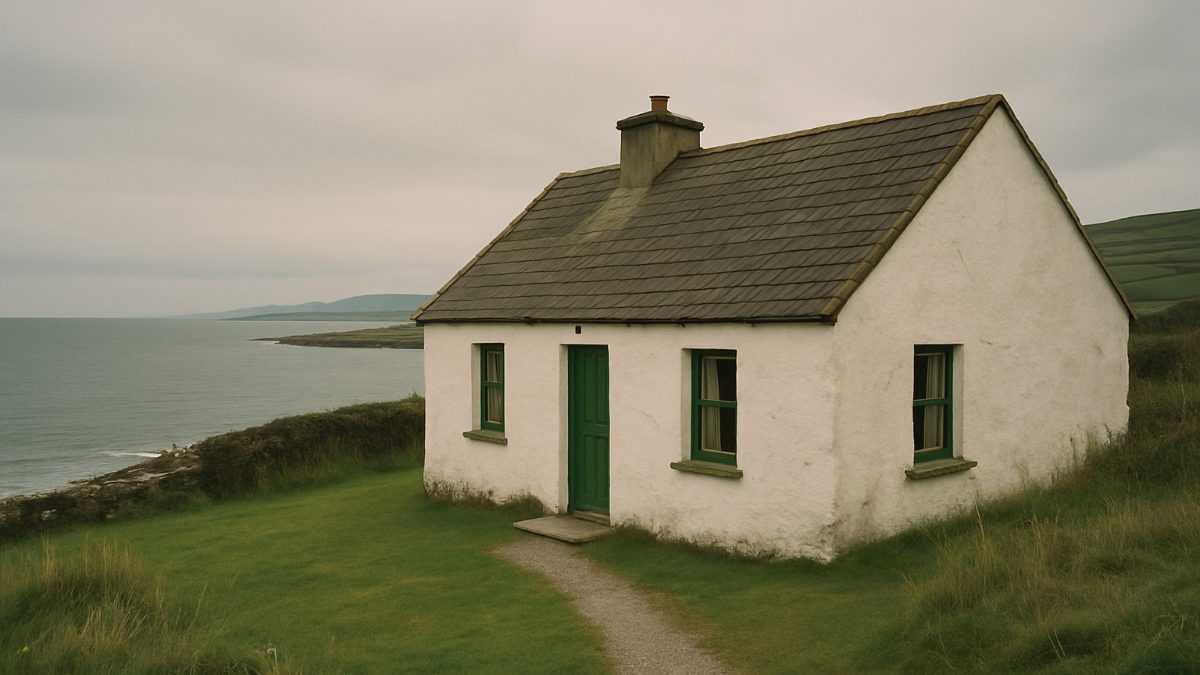
The dream is easy to picture: a stone cottage above a Clare inlet, or a timber-clad bungalow looking west over a Donegal bay. You use it in summer, maybe rent it out the rest of the year, and it pays for itself while holding its value. For a long time, that dream more or less worked. Whether it still does in 2025 is a more complicated question than it used to be.
Let's be honest about what has changed. Coastal property prices in many parts of Ireland have risen sharply over the past decade. Competition from remote workers who relocated permanently, plus sustained demand from both Irish and international buyers, pushed up values along the Wild Atlantic Way and in parts of Wexford, Wicklow and Cork. At the same time, the rules around short-term letting have tightened considerably, and running costs have crept up in ways that catch people off guard.
The case for buying
There is a straightforward argument in favour of ownership. You have somewhere of your own, available whenever you want it, that you can gradually make feel like a second home rather than a borrowed one. Over a long enough horizon, coastal property in Ireland has generally held its value, and in some areas grown it significantly. You are not paying rent to a landlord, and if you let the property through an approved short-term letting platform, some of that income can offset your costs.
Ownership also lets you make the place your own. That matters more than it sounds. Dealing with damp walls, improving insulation, or choosing finishes that actually suit the coastal climate takes time and money, but once it is done, it is done. If you are thinking about insulating a coastal property, the learning curve is real, and owning outright means you only have to climb it once.
There is also something to be said for having a fixed point on the coast, a place you return to year after year, where you learn the tides and the neighbours and the best spots. That kind of familiarity is harder to build when you are always staying somewhere different.
The financial reality
None of that comes free, and the numbers deserve a clear look.
A modest two-bedroom coastal property in a desirable area, somewhere like the Beara Peninsula, the Aran Islands fringes, or the Copper Coast in Waterford, might cost anywhere from two hundred thousand euro to well over four hundred thousand, depending on condition and location. Add stamp duty, solicitor fees, and any immediate repairs, and your upfront outlay climbs before you have spent a night there.
Running costs on a coastal property tend to be higher than on an inland equivalent. Salt air is hard on windows, guttering, paintwork and anything metal. Heating a poorly insulated stone building through winter costs more than you expect. Insurance for a property that sits empty for parts of the year is a separate, more expensive product than standard home insurance. Property tax, maintenance, and utility standing charges add up even when no one is there.
Then there is the rental income question. The Irish government has moved to restrict short-term letting in areas designated as rent pressure zones, with an aim to return more properties to long-term residential use. If your coastal property sits within a rent pressure zone, letting it on platforms like Airbnb for more than ninety nights a year requires planning permission in most cases. Outside those zones the rules are somewhat more flexible, but they are still evolving. Citizens Information has useful, regularly updated guidance on the planning and tax obligations that apply to holiday letting, and it is worth reading carefully before you commit to a purchase with rental income factored into your calculations.
Income tax on rental earnings applies regardless of the platform used. If you use an agent to manage the property, that cost comes off the top too, typically somewhere between fifteen and twenty-five percent of rental income.
The case for renting instead
Renting a different coastal property each year has become easier, not harder. The supply of well-finished holiday cottages and self-catering properties around the Irish coast has grown. You can spend one summer on the Wexford coast, another in Connemara, another on the Dingle Peninsula, without locking any capital into a single location.
For someone who values variety, renting suits that preference directly. It also sidesteps the maintenance burden entirely. When the boiler fails in February, it is not your problem. You are not paying insurance, property tax or standing charges through the months you are not there.
The weekly or nightly cost of renting a good coastal property in high season has risen substantially in recent years. A week in a well-located property in July or August can run from one thousand to two thousand euro or more, depending on size and county. That is real money. But set against the full cost of ownership, the comparison is less clear-cut than it first appears, particularly if you only realistically use the coast for three or four weeks a year.
Renting also lets you match the property to your actual needs each year. A family with young children needs something different to the same couple a decade later. Ownership locks you into whatever you bought.
So which makes sense?
For most people, the honest answer depends on how often you will genuinely use it, whether you have realistic letting income prospects under current regulations, and how much you value the continuity and permanence of owning a specific place on the coast.
If you are drawn to one stretch of coastline in particular and plan to use the property regularly over many years, ownership can still make emotional and financial sense. If your attachment is to the idea of the coast rather than one specific place, renting is a simpler and more flexible arrangement. The dream is still real. It just needs a clearer-eyed budget behind it than it used to.