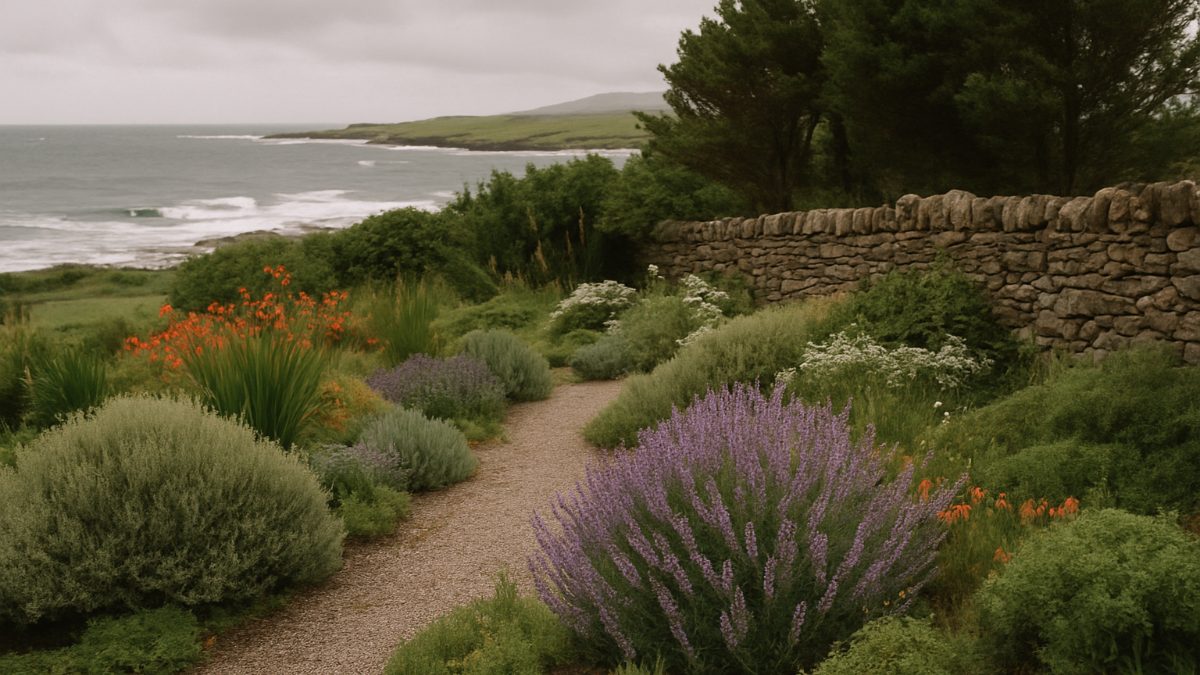
Gardening within sight of the Atlantic is a different proposition entirely from gardening anywhere else in Ireland. The wind carries salt. The soil, where it exists at all, is often thin, acidic, and quick-draining. And the rain, though there is plenty of it, can be driven horizontally for days at a stretch. None of this makes a decent garden impossible. Plenty of people along the west coast have them. But it does mean starting with an honest picture of what you are working against.
Sort the windbreak first, everything else second
There is little point spending money on plants until you have reduced wind speed on your site. Salt-laden air on its own will not kill most plants outright, but when it is moving at force across foliage all winter, it desiccates leaves, scorches new growth, and slowly exhausts even the toughest specimens.
- Escallonia is probably the most reliable hedging plant for exposed Atlantic gardens. It tolerates salt, clips well, and produces flowers that pollinators use. Varieties like Escallonia rubra establish quickly and form a decent barrier within a few seasons.
- Fuchsia magellanica is already naturalised along much of the west coast for good reason. It softens fence lines and copes with conditions that would finish off box hedging or laurel.
- Griselinia littoralis works well slightly further inland as a second belt once your outer row has taken hold. On the immediate coast it can struggle in hard winters, but it earns its place in sheltered corners.
- If you need instant results while hedging matures, a slatted timber fence or a purpose-made windbreak mesh will do the job. Solid barriers can actually make things worse by causing turbulence on the lee side. Permeable barriers slow the wind rather than stop it dead.
What to do with the soil
West of the Shannon, and particularly in counties Mayo, Galway, and Clare, many coastal gardens sit on very shallow soil over rock, or on free-draining sandy ground that holds almost no nutrients. Both situations call for the same basic remedy: organic matter, added consistently over years rather than all at once.
- Well-rotted seaweed is the traditional amendment along this coast, and it still makes sense. If you are gathering it yourself, use storm-cast weed from the tideline rather than cutting live weed from rocks. Let it sit in a corner for a season before digging it in.
- Homemade compost mixed with topsoil builds structure gradually and improves moisture retention without waterlogging.
- Raised beds built from reclaimed timber or stone give you control over soil composition from the start. They are especially useful on very rocky plots where digging down is simply not possible.
- Test your pH if you are unsure. Coastal soils tend toward the acid end, which suits some plants well but needs adjusting with lime if you want to grow brassicas or most herbs reliably.
Plants that actually perform
Once the windbreak is in place and your soil has some body to it, the plant palette opens up more than most people expect. Pittosporum, hebes, and sea thrift all handle exposure well. Crocosmia and montbretia, which you will see growing wild along every boreen from Kerry to Donegal, are virtually indestructible. Agapanthus does surprisingly well in sheltered west coast spots with good drainage.
For vegetables, focus on what roots well rather than what needs calm conditions and warmth. Kale, perpetual spinach, broad beans, and most root vegetables are reliable. Courgettes and outdoor tomatoes are a gamble in most exposed spots and need a cloche or a poly tunnel to produce anything worth eating.
Ornamental grasses handle wind movement beautifully, both practically and visually. Molinia and Miscanthus varieties move with gusts rather than fighting them, and they rarely look battered the way broad-leafed perennials can by late October.
The same principles that apply to keeping moisture in and wind out of a garden apply to a house on this coast too. If you are dealing with both, it can be useful to read about insulating a west coast cottage properly, since the structural and garden challenges often overlap in how you think about shelter and exposure on the same site.