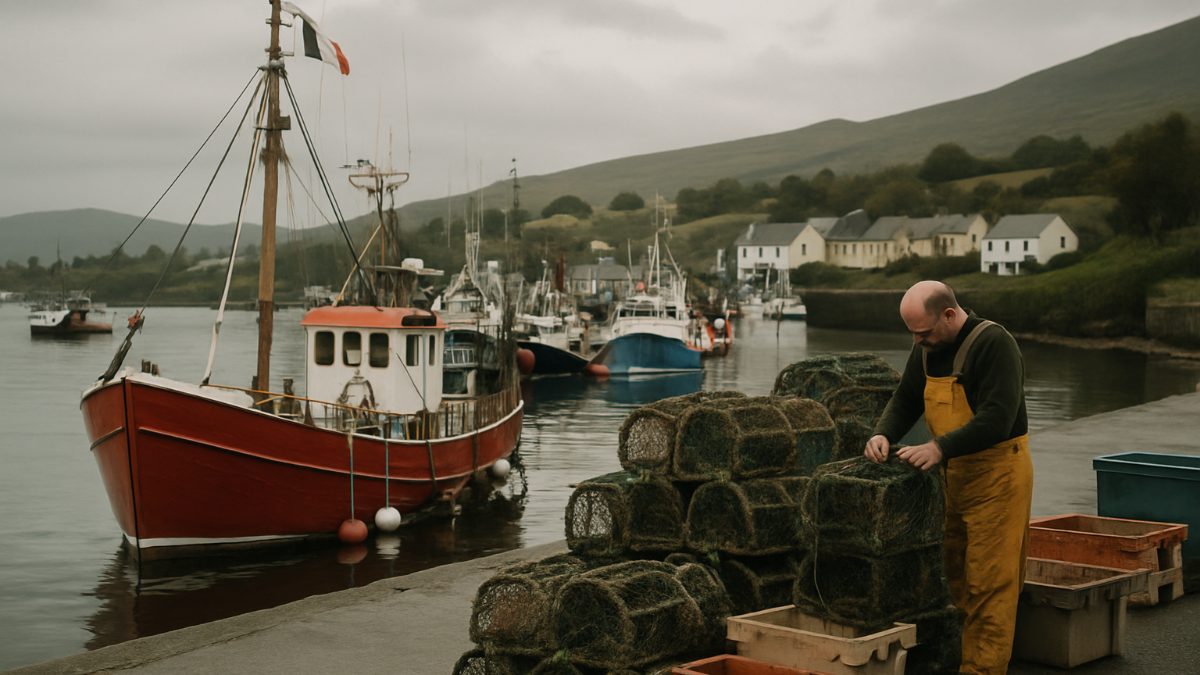
By half five in the morning, the quay at Castletownbere is already moving. Engines turning over, gear being checked, the particular smell of diesel and salt water that never quite leaves you once you know it. Most visitors to this corner of the Beara Peninsula arrive later in the day, when the boats are already out and the harbour looks quiet and photogenic. What they miss is the machinery of it, the actual working life that makes a place like this what it is.
Castletownbere is one of the busiest white fish and shellfish ports in Ireland, which can surprise people who think of it mainly as a scenic stop on a coastal drive. The town has a serious working harbour, with a fish market, cold storage, and a regular trade in lobster, crab, prawn, and whatever the season allows. Lobster is the prestige catch here, as it is along much of the southwest coast, and the men and women who go after it are working a tradition that goes back generations, even if the boats and regulations look very different now.
Lobster fishing along this stretch of coastline is done with pots, typically hauled in strings from small to medium sized vessels. A boat might carry several hundred pots, working grounds out along the Beara Peninsula and beyond. The season runs roughly from late spring into autumn, though the dates shift with licensing conditions and stock management rules, which have tightened considerably over the decades. That tightening has been controversial in some quarters, accepted as necessary in others. The fishermen here have opinions on it, as you would expect, and if you spend any time around the harbour, you will hear them.
What strikes you about Castletownbere is how compact it all is. The fish market, the chandleries, the boats, the people who depend on the boats, all within a few minutes walk of each other. It functions as a real community built around a real industry, not a reconstruction of one. Compare that to some ports further along the coast where the fishing declined and the infrastructure followed, and you start to appreciate what has been held onto here.
The shellfish that comes through Castletownbere moves fast. Much of it goes to export markets in France and Spain, often within a day or two of landing. The restaurants and seafood shops in town do well during the summer, and there are good places to eat a crab claws or a piece of fish near the water, but this is not a place that has reinvented itself around tourism. The fishing came first and still comes first.
If you are visiting, a few practical things worth knowing. The harbour area is working space, so be aware of that, especially in the early morning when boats are departing or returning. There is usually activity around the fish market on weekday mornings. The town itself has accommodation, a couple of good pubs, and enough to keep you a day or two. Bere Island is a short ferry crossing from the pier and worth an afternoon. The wider Beara Peninsula is some of the finest coastal scenery in Ireland, and planning a walk or a slow drive along that coastline rewards taking a few extra days rather than rushing it.
If you come in summer, you will find the place busier with visitors than it once was, but not overrun. Come in September and the light is extraordinary, the crowds are gone, and the lobster boats are still heading out before the sun is properly up. That feels like the real version of the place. It is worth being there for it.