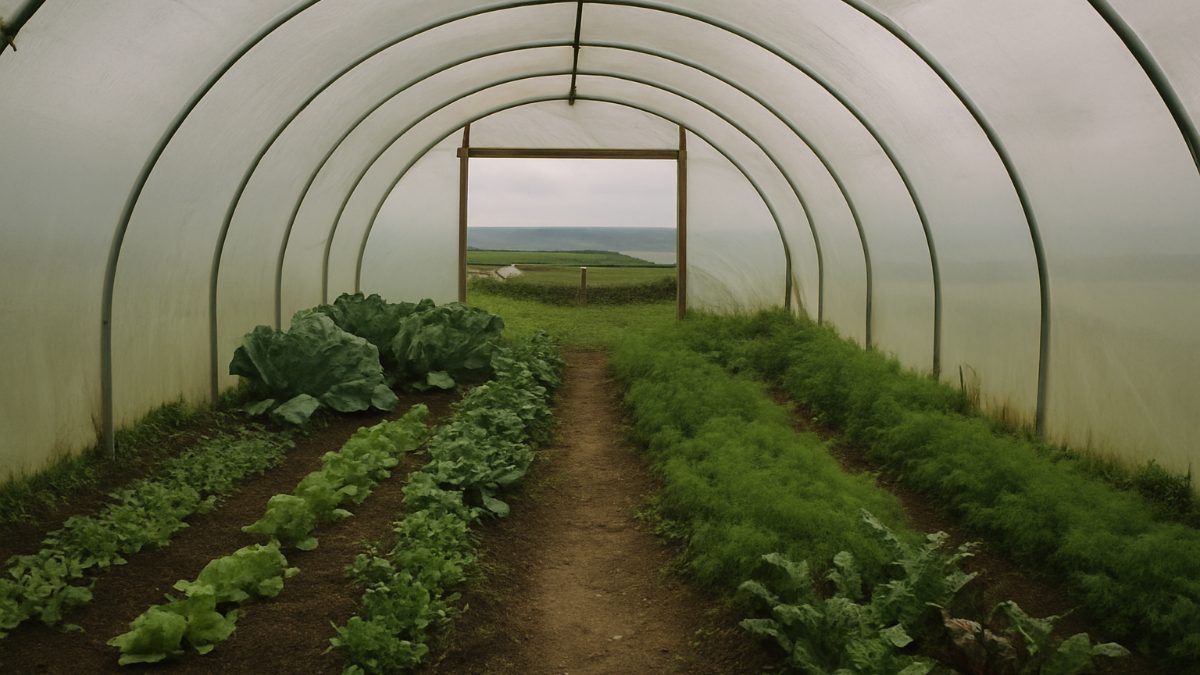
I moved from inland Tipperary to the west Clare coast about four years ago, and I brought most of my growing habits with me. That was the first mistake.
In Tipperary I had a polytunnel I was reasonably proud of. Tomatoes, cucumbers, peppers, a corner given over to salad leaves and herbs. The setup worked well enough. I knew the soil, knew roughly when the frosts came and went, and had figured out a ventilation routine that kept disease mostly at bay. When we relocated to a house about two kilometres from the Atlantic, I assumed the polytunnel would transfer cleanly. Same structure, same beds, same seeds. I was wrong about almost everything except the seeds.
What the sea air actually does inside a polytunnel
The obvious thing people mention is salt. And yes, building any kind of garden on the west coast means reckoning with salt spray, wind direction and exposed ground. But inside the polytunnel I expected to be sheltered from all that. The cover keeps the wind out. What I didn't account for was how the coastal air itself behaves once it gets in.
Humidity on the Clare coast is not the same creature as humidity in Tipperary. Inland, humid days happen. On the coast, humid days are the norm from about October through to May, and even in summer the air holds moisture in a way that catches you off guard if you're not used to it. Inside a polytunnel, that baseline moisture level climbs fast. By mid-morning on a cool June day, condensation was dripping from the cover onto my tomato plants. By July I had botrytis in the lower leaves of nearly everything.
What I had been doing in Tipperary was ventilating when it felt warm, meaning I opened the doors on sunny afternoons. On the coast, that logic is backwards. You need to ventilate from early morning, before heat builds, because that's when the difference between inside and outside temperature is greatest and condensation is most active. Leaving ventilation until afternoon means hours of damp, still air sitting on your plants every single day.
The changes that actually helped
The first thing I did was fit a roll-up side vent along the eastern face of the tunnel. This cost less than I expected and made an immediate difference. Air moves through the structure rather than just in and out the ends. The cross-flow pulls moisture away instead of letting it pool.
I also raised the beds. The original ground-level beds in my Tipperary tunnel were fine because the soil dried out reasonably well between waterings. Here, water sits longer, drainage is slower, and root rot crept into my courgette plants two years running before I worked this out. Raised beds with decent gravel beneath them changed that. The roots stay accessible to moisture without being drowned in it.
Spacing matters more than it ever did inland. I'd grown tomatoes at about forty-five centimetres apart for years. Here I push them closer to sixty, sometimes more, to get airflow between the plants themselves. It feels wasteful at first, giving up growing space, but the alternative is a wall of foliage that holds damp and breeds trouble.
I also stopped growing cucumbers entirely, at least inside the tunnel. They want heat and still air, and getting those conditions reliably on this stretch of coast requires more active management than I want to give. Courgettes grown outside under a cloche from late May do better here than cucumbers under cover ever did. That was a genuinely hard adjustment because I'd had good cucumber years inland, but you follow what the place tells you.
What grows well, and what surprised me
Salad leaves, spinach and chard are excellent. They don't need the warmth that fruiting crops do, they benefit from some humidity, and they give you something to harvest almost year-round if you succession sow. Herbs are fine if you keep the basil well away from damp corners, which basil absolutely hates. Parsley and chives are almost indestructible.
Tomatoes work, but only with the ventilation changes above and a strict routine of removing lower leaves once they touch the soil. Cherry varieties handle the conditions better than beef or plum types, in my experience. Sungold and Gardener's Delight have been the most reliable.
Peppers and chillies disappoint. They need more consistent warmth than the tunnel holds here, and they sulk through the cool Atlantic summers. I grow a few for the sake of it, but I wouldn't plan a season around them.
The thing nobody tells you about moving from an inland growing situation to a coastal one is that the challenge isn't the storms or the salt or even the rain. It's the persistent low-level damp that never quite leaves. Learning to manage airflow rather than just warmth is the central skill, and it took me the better part of two full growing seasons to stop fighting it and start working around it.
If you're setting up a polytunnel on a site that gets any exposure to the Atlantic, fit the side ventilation before you plant anything. That one thing would have saved me a lot of grief in year one.